A police-ordered tow can be an alarming experience for vehicle owners. Unlike routine towing due to a breakdown or parking violation, a police tow is typically enforced for legal or safety reasons. Understanding what happens during a police-ordered tow helps vehicle owners navigate the process calmly, comply with regulations, and retrieve their vehicles efficiently.
Police-ordered towing usually occurs in cases such as accidents, illegally parked cars that obstruct traffic, abandoned vehicles, or vehicles involved in criminal investigations. While it may seem sudden, the process is governed by strict protocols to ensure legality, safety, and accountability.
Why a Police-Ordered Tow May Occur
Police-ordered tows occur for a variety of reasons, all related to maintaining public safety, enforcing the law, or preserving evidence. Vehicles may be towed if they obstruct traffic, are parked in hazardous locations, or pose a safety risk to the public.
In the event of a road accident, vehicles may be towed by police to clear the scene, facilitate investigations, or ensure that damaged cars do not block traffic. Vehicles involved in criminal activities, such as being stolen or used in illegal operations, may also be subject to police tow for evidence preservation. Understanding the reasons behind the tow can help vehicle owners cooperate with authorities and navigate the retrieval process efficiently.
The Role of Police in the Towing Process
When a police-ordered tow is initiated, the police officer on the scene coordinates with a licensed towing company to remove the vehicle safely. Officers ensure that the tow is legally justified, document the situation, and supervise the transfer of the car to prevent disputes or unauthorized removal.
Police involvement also ensures that the vehicle is handled with care, especially in accident or crime-related scenarios. Their documentation serves as an official record of the tow, which can be crucial if questions arise later about liability, damage, or legal compliance. The presence of police also ensures that the towing process adheres to all applicable laws and safety regulations.
How the Vehicle Is Towed
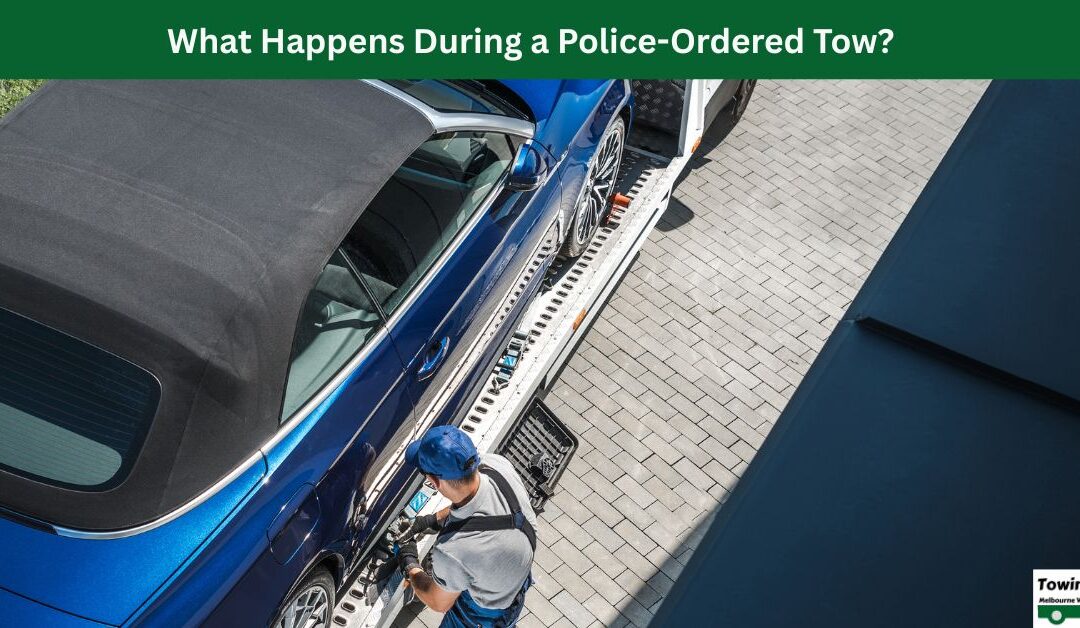
Police-ordered towing typically uses licensed tow trucks equipped for safety and efficiency. Depending on the condition of the vehicle, a flatbed tow may be used for complete removal, while wheel-lift or dolly towing may be sufficient for minor cases.
Vehicles involved in accidents or with mechanical damage require special care to prevent further harm. Tow operators follow strict procedures to secure the car, lift it safely, and transport it to the designated impound lot or storage facility. This professional handling minimizes the risk of additional damage and ensures the vehicle is preserved for legal or insurance purposes.
Documentation and Notification
When a car is towed by police, proper documentation is created. This includes details such as the reason for the tow, the location, time, and officer in charge. In many cases, the owner is issued a notice or citation explaining where the vehicle has been taken, the towing company involved, and any associated fees or legal requirements.
If the vehicle owner is not present during the tow, authorities may leave a notice at the location or send official communication via mail. This documentation ensures transparency and allows the owner to follow the correct procedures to retrieve the vehicle legally and efficiently.
Fees, Storage, and Retrieval
After a police-ordered tow, the vehicle is typically stored at a secure impound lot. Owners are responsible for towing fees, storage charges, and any applicable fines related to the violation or incident. Fees can vary depending on the towing company, duration of storage, and reason for the tow.
To retrieve the vehicle, the owner must provide proof of ownership, identification, and any relevant documents such as insurance or registration. Following the proper procedures ensures that the car is returned without unnecessary delays and helps resolve any disputes regarding fees or damages.
Dealing with Damages and Disputes
Police-ordered tows can occasionally result in minor damage, despite careful handling. It is important for vehicle owners to inspect their car upon retrieval and document any issues immediately. Many towing companies and police departments have protocols for reporting and resolving damages, including insurance claims if necessary.
Disputes regarding the tow, fees, or damages can usually be addressed through official channels, including the towing company, police department, or municipal review boards. Prompt action and thorough documentation are essential for resolving any concerns efficiently and fairly.
Conclusion
A police-ordered tow is a legally controlled process designed to maintain public safety, enforce laws, and protect property. Understanding why your vehicle may be towed, how the police coordinate with towing companies, and the procedures for documentation, fees, and retrieval is essential for a smooth experience.
Vehicle owners can minimize stress by cooperating with authorities, promptly identifying the towing company and location, and following all required steps for retrieval. While the experience may be inconvenient, proper knowledge and preparation help ensure that the process is handled legally, safely, and efficiently. Police-ordered towing ultimately serves the community by keeping roads safe, traffic flowing, and vehicles managed responsibly.
Contact us
Towing Melbourne Wide
4/10 Auburn Grove
Hawthorn East VIC 3123
(03) 9956 1908
Recent Comments