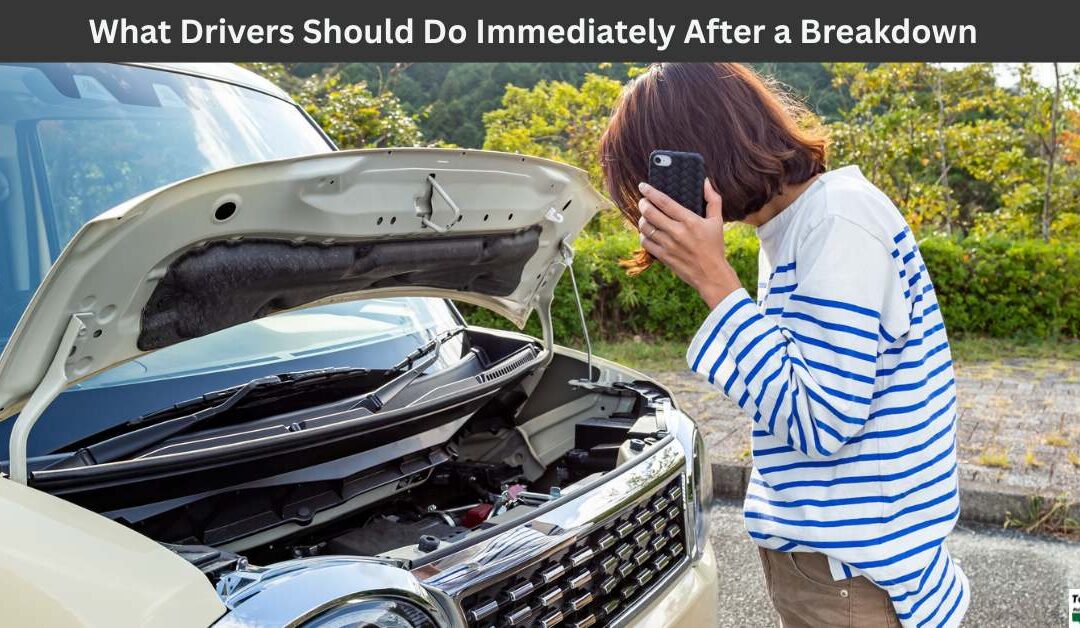
A vehicle breakdown can happen at any time, often when drivers least expect it. Whether caused by mechanical failure, a flat tire, or an overheating engine, a breakdown can leave drivers feeling stressed and unsure of what to do next. In busy traffic areas or on highways, a stopped vehicle can quickly become a safety hazard if the situation is not handled properly. Knowing what steps to take immediately after a breakdown can help protect you, your passengers, and other drivers on the road. By staying calm and following the correct actions, drivers can manage the situation safely while waiting for professional assistance.
Stay Calm and Assess the Situation
The first and most important step after a breakdown is to stay calm and avoid panic. Sudden vehicle problems can be frightening, especially if they occur in heavy traffic or unfamiliar areas. However, remaining calm allows you to think clearly and make better decisions.
Take a moment to assess the situation and try to understand what may have caused the breakdown. Pay attention to any warning lights on the dashboard, unusual sounds from the engine, or smoke coming from under the hood. These signs can provide clues about what went wrong with the vehicle.
If the car is still running but not performing properly, you may be able to drive it slowly to a safer location. If the engine has completely stopped, focus on securing the vehicle and ensuring that you and your passengers are safe.
Assessing the situation carefully helps you decide whether the issue can be handled quickly or if professional assistance will be needed.
Move Your Vehicle to a Safe Location
If your vehicle can still move, the next step is to steer it to a safe location away from active traffic. Pulling over to the shoulder of the road, a parking lot, or a nearby service area helps reduce the risk of accidents.
Stopping in the middle of a traffic lane can create a dangerous obstacle for other drivers. Moving the vehicle even a short distance away from traffic can make a big difference in improving safety.
Once the vehicle is in a safer position, turn off the engine and engage the parking brake. If you are on a slope, turning the wheels slightly toward the curb can prevent the car from rolling.
Positioning the vehicle safely also makes it easier for roadside assistance or a tow truck to reach you when help arrives.
Turn On Hazard Lights and Increase Visibility
After securing the vehicle, turn on your hazard lights immediately. Hazard lights alert other drivers that your car is experiencing a problem and is not moving normally. This warning gives approaching drivers time to slow down and safely pass your vehicle.
If you have reflective warning triangles or emergency markers in your car, placing them behind your vehicle can further improve visibility. These markers act as an early warning for drivers approaching from behind.
Visibility becomes even more important at night or during poor weather conditions such as rain, fog, or snow. In these situations, keeping your hazard lights on at all times helps reduce the risk of another vehicle accidentally colliding with your car.
Taking simple steps to make your vehicle visible can greatly improve safety during a roadside breakdown.
Contact Roadside Assistance or a Towing Service
Once the immediate safety steps have been taken, the next action is to call for professional help. Roadside assistance services or towing companies are trained to handle breakdown situations and provide the support drivers need.
When contacting a service provider, be ready to provide important information such as your location, the type of vehicle you are driving, and a description of the problem. Mention nearby landmarks, highway exits, or road signs to help the service team find you quickly.
Some breakdown issues can be resolved through roadside assistance, such as jump-starting a battery or replacing a flat tire. However, if the problem is more serious, a tow truck may be required to transport the vehicle to a repair shop.
Professional assistance ensures that the vehicle is handled properly and that the situation is resolved safely.
Stay Safe While Waiting for Help
After contacting assistance, the final step is to wait safely until help arrives. Your safety and the safety of your passengers should remain the top priority during this time.
If it is safe to do so, exit the vehicle and move to a secure area away from traffic, such as behind a guardrail or on a raised roadside area. Standing too close to the road can be dangerous, especially on highways where vehicles travel at high speeds.
If leaving the vehicle is not safe due to traffic or weather conditions, staying inside with your seatbelt fastened may be the better option. Keep your hazard lights on and remain alert to your surroundings.
Avoid attempting complicated repairs on the roadside unless you are confident it is safe to do so. Waiting for trained professionals ensures that the problem is handled properly without putting yourself at risk.
Conclusion
A vehicle breakdown can be stressful, but knowing what to do immediately after it happens can help prevent the situation from becoming dangerous. Staying calm, moving the vehicle to a safe location, and using hazard lights are the first steps in managing a roadside emergency. Contacting roadside assistance or a towing service ensures that trained professionals can provide the help needed.
While waiting for assistance, focusing on safety and remaining aware of your surroundings is essential. By following these steps, drivers can protect themselves, their passengers, and other motorists. Understanding how to respond to a breakdown allows drivers to handle unexpected situations more confidently and ensures that help arrives safely and efficiently.
Contact us
Towing Melbourne Wide
4/10 Auburn Grove
Hawthorn East VIC 3123
(03) 9956 1908
Recent Comments