Why Proper Towing Equipment Matters
Towing a vehicle is not as simple as hooking it to another vehicle and driving away. The process requires specialized equipment designed to secure and stabilize the load during transport. Attempting to tow without the right tools can put drivers, passengers, and other road users at serious risk. Proper towing equipment ensures that the towed vehicle remains stable, that the towing vehicle operates safely, and that no unnecessary damage occurs during the journey.
In addition to physical safety, using the correct equipment is often a legal requirement. Authorities in many jurisdictions mandate that vehicles be towed using approved methods and devices. This means that using makeshift solutions—such as ropes, unapproved chains, or improvised towing points—could result in fines or liability for damages.
Safety Risks to Drivers and Passengers
Without proper towing equipment, maintaining control of both vehicles becomes difficult. Improperly secured vehicles can sway, fishtail, or detach altogether. This instability can lead to collisions, especially at higher speeds or in adverse weather. In addition, makeshift towing setups often lack adequate braking support. If the towing vehicle brakes suddenly, the towed car may slam into it, causing injury or damage.
Another concern is visibility. Professionally equipped tow trucks use warning lights, reflective markers, and safety flags to alert other drivers. Without these signals, other motorists may not notice a towed vehicle in time to avoid it, increasing the risk of rear-end collisions.
Damage to the Towed Vehicle
Improper equipment can easily cause mechanical and cosmetic damage to the towed vehicle. Incorrect attachment points can bend frames, damage bumpers, or put stress on suspension components. If the vehicle is towed with its drive wheels on the ground without the correct settings, it can also suffer severe transmission damage.
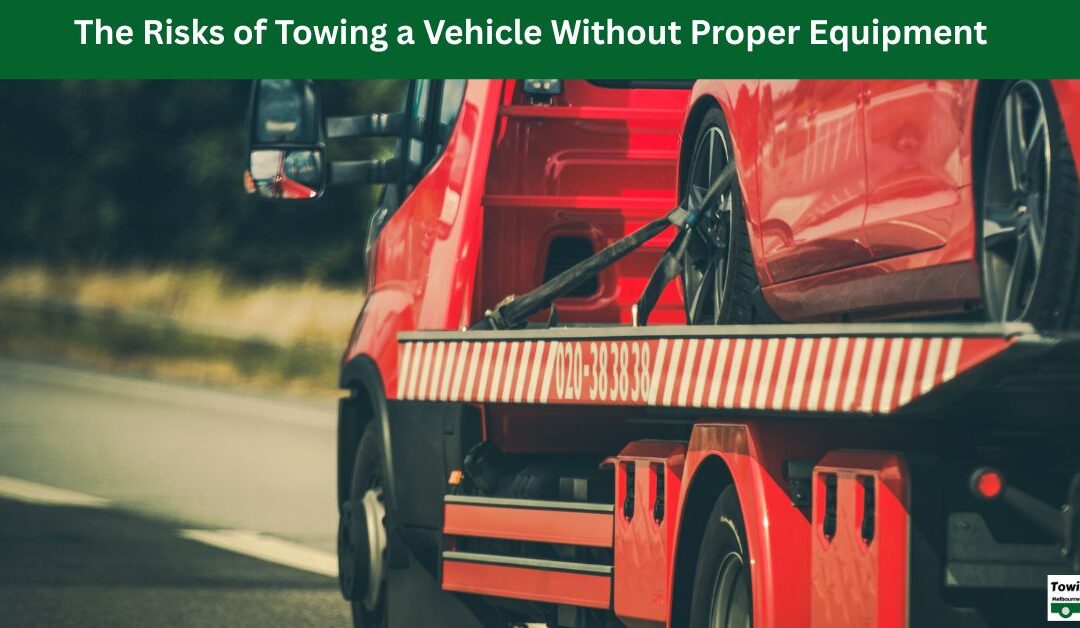
Towing dollies, wheel lifts, and flatbeds are designed to minimize these risks by lifting the vehicle in a way that avoids unnecessary strain on vital components. Without them, even a short tow could lead to costly repairs.
Legal and Financial Consequences
Towing without proper equipment can violate local traffic safety laws, resulting in fines, license points, or even vehicle impoundment. If an accident occurs due to an unsafe towing setup, the person responsible could be held liable for property damage, injuries, or fatalities. Insurance companies may also refuse to cover damages if unsafe towing practices are found to be the cause.
This legal risk extends beyond drivers. Businesses that tow without proper equipment can face lawsuits, loss of licenses, and damage to their reputation.
Conclusion
Towing without proper equipment is not worth the risks. The safety of drivers, passengers, and other road users depends on secure, stable towing practices. Investing in or relying on professional towing services ensures that vehicles are transported safely, legally, and without damage.
Contact us
Towing Melbourne Wide
4/10 Auburn Grove
Hawthorn East VIC 3123
(03) 9956 1908
Recent Comments