Experiencing a vehicle breakdown is stressful in any situation, but when it happens in a busy area—such as a city centre, highway, or congested intersection—the pressure intensifies. Heavy traffic, limited space, and impatient drivers can make the situation feel overwhelming. However, knowing the proper steps to take can protect your safety and reduce disruption to others on the road. Handling a breakdown calmly and correctly ensures both your well-being and the safety of surrounding motorists.
Stay Calm and Signal Immediately
When your vehicle starts showing signs of a breakdown—such as loss of power, overheating, or strange noises—the first and most essential step is to stay calm. Panic can lead to poor decisions. As soon as you recognise the issue, safely reduce speed and turn on your hazard lights. These flashing indicators alert other drivers that your vehicle is in distress. In a busy area, every second counts. Clear communication through hazard lights can prevent sudden collisions and give drivers behind you enough time to react and change lanes.
If possible, steer the vehicle toward the side of the road, shoulder, or a designated emergency lane. In urban areas, aim for a parking space, side street, or bus stop area to clear the flow of traffic. Remaining in active lanes increases the risk of rear-end collisions and can cause major traffic disruptions.
Secure the Area and Ensure Personal Safety
Once the vehicle is stopped, your primary responsibility is safety—both yours and that of your passengers. Keep your seatbelt on until the car has fully stopped. If safe, exit the vehicle on the side away from traffic. Avoid standing directly in front or behind your car, as other vehicles may not see you in time. In very busy areas or on highways, it may be safer to remain inside the vehicle with seatbelts fastened, especially if the surroundings pose a danger.
Use hazard triangles or reflective safety devices if you have them, placing them behind the vehicle to warn oncoming traffic. Even during daylight, additional warning signs enhance visibility and reduce the risk of accidents. Never attempt major repairs yourself on a heavily trafficked road, as standing on the road can be highly dangerous.
Contact Professional Assistance Immediately
After securing your position, contact a professional towing or roadside assistance service. In busy areas, response times are often faster due to the frequency of service providers nearby. Provide your exact location, including nearby landmarks, exits, or street names, to ensure a quick dispatch. Do not rely on strangers to assist with towing or pushing the vehicle, as untrained help can cause further damage or lead to injury.
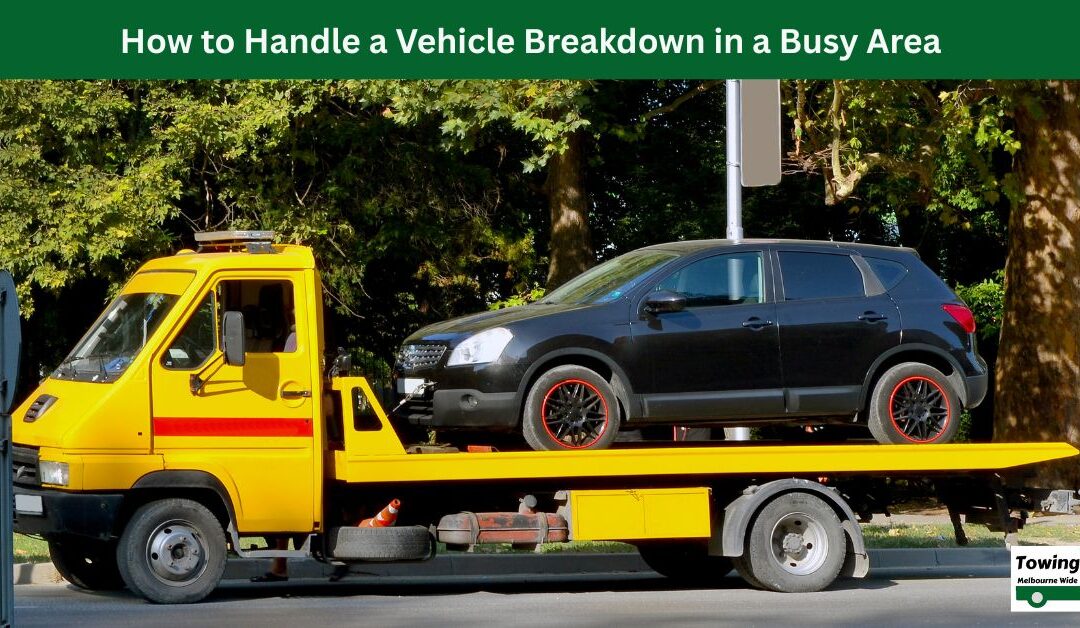
Professional towing services are trained to handle breakdowns in high-traffic areas. They arrive equipped with safety gear, cones, and high-visibility equipment to manage the scene. Their intervention not only protects your vehicle but helps prevent additional traffic disruptions. In certain cases, local authorities may also be notified to assist with traffic control until your vehicle is safely removed.
Communicate with Other Road Users and Authorities
In the event of a breakdown in a busy city centre or highway, communication is essential. If your vehicle is blocking a lane and posing a risk, contact emergency services or local highway patrol. They can provide on-site traffic control to reduce the chances of further incidents. In some cases, traffic controllers or police may arrive before the tow truck to manage flow and ensure the safety of everyone involved.
If you are in a busy urban neighbourhood and your vehicle has stopped near businesses or pedestrian crossings, remain polite and calm when approached by others. Avoid arguments and simply inform them that professional help is on the way. Staying composed reassures others and prevents unnecessary escalation of frustration in high-pressure environments.
Plan Ahead and Prevent Future Breakdowns
While not all breakdowns can be predicted, many can be prevented through regular vehicle maintenance. Check engine lights, strange sounds, and leaking fluids should never be ignored. Routine inspections of tires, brakes, batteries, and fluid levels significantly reduce the chance of sudden road failures. Roadside membership with a towing or assistance provider can also offer peace of mind, ensuring you are never stranded without support.
Having an emergency kit in your car—including a phone charger, reflective vest, warning triangles, and first-aid supplies—can be invaluable during a breakdown. Preparation helps maintain calm during chaotic situations, especially in areas where movement is restricted and traffic is heavy.
Conclusion
A vehicle breakdown in a busy area is undoubtedly stressful, but with the right approach, it can be managed safely and efficiently. Staying calm, moving the vehicle to a safe zone, activating hazard signals, and calling a reputable towing service are crucial steps. Protecting your safety and minimising disruption to others should always be the top priority. By being prepared and understanding how to handle such situations, drivers can turn a potential crisis into a controlled and manageable experience. In the end, it is not just about resolving a mechanical failure—it is about ensuring safety and responsibility on the road.
Contact us
Towing Melbourne Wide
4/10 Auburn Grove
Hawthorn East VIC 3123
(03) 9956 1908
Recent Comments