Commercial vehicles, such as trucks, buses, and vans, play a crucial role in transporting goods, people, and equipment across cities and regions. Unlike regular cars, commercial vehicles are larger, heavier, and more complex, making breakdowns or accidents more challenging. Towing services are essential for ensuring these vehicles remain operational, safe, and compliant with regulations. Without professional towing support, a single breakdown can disrupt schedules, increase costs, and pose safety risks to other road users.
Understanding Commercial Vehicle Challenges
Commercial vehicles face unique challenges compared to standard passenger cars. They carry heavy loads, have larger dimensions, and often operate under strict delivery schedules. A breakdown in a busy area or on a highway can cause significant delays, obstruct traffic, and create safety hazards. Additionally, these vehicles require specialized equipment for towing due to their weight and size. Recognizing these challenges is crucial for businesses and drivers to ensure they have access to reliable towing services when needed.
Equipment and Expertise Requirements
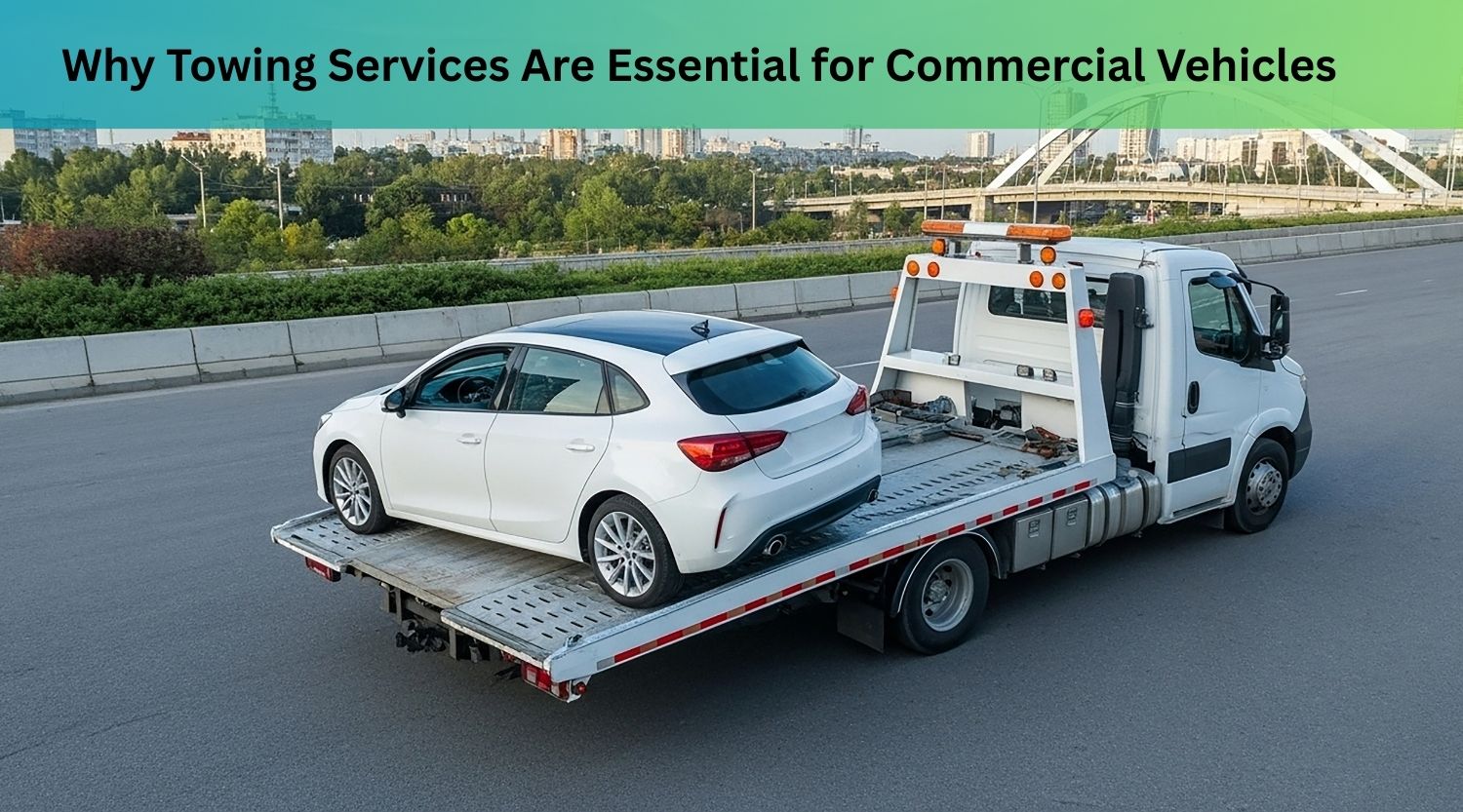
Towing commercial vehicles requires specialized equipment that differs from standard tow trucks. Heavy-duty trucks, low loaders, and flatbeds are commonly used to transport large vehicles safely. Operators must be trained in handling heavy loads, securing vehicles, and navigating tight spaces while towing. Expertise also includes knowledge of vehicle types, axle configurations, and load distribution to prevent damage during transport. Using the wrong equipment or technique can result in serious accidents or costly vehicle damage, highlighting the importance of professional towing services.
Minimizing Business Disruption
For companies relying on commercial vehicles, downtime can be extremely costly. Delayed deliveries, missed appointments, and halted operations can impact customer satisfaction and revenue. Towing services help minimize disruption by quickly removing broken-down or accident-involved vehicles from the road and transporting them to repair facilities. Prompt towing allows businesses to get replacement vehicles into service and maintain schedules, reducing financial losses and maintaining operational efficiency.
Supporting Compliance and Legal Requirements
Commercial vehicles are subject to strict regulations regarding safety, weight limits, and roadworthiness. Improper towing or leaving a disabled vehicle on the road can lead to legal penalties, fines, or insurance complications. Professional towing companies ensure that vehicles are moved in compliance with local laws, weight regulations, and safety standards. Proper towing prevents further mechanical damage and protects businesses from potential liability, insurance claims, and regulatory violations.
Emergency Response Capabilities
Accidents, breakdowns, or severe weather events can leave commercial vehicles stranded in challenging locations. Towing services equipped for commercial operations provide emergency response capabilities, including 24/7 service, heavy-duty towing, and specialized recovery tools. These services can handle on-site problems like stuck vehicles, tipped trucks, or blocked highways. Having access to reliable towing in emergencies ensures that commercial operators can respond effectively, maintain safety, and reduce downtime in critical situations.
Conclusion
Towing services are indispensable for commercial vehicles. Their specialized equipment, trained operators, and emergency response capabilities ensure that trucks, buses, and vans are moved safely and efficiently. By minimizing business disruption, supporting compliance with regulations, and handling complex towing challenges, these services protect both the vehicles and the drivers. For commercial operators, investing in reliable towing support is not just a convenience—it is a critical part of maintaining safe, efficient, and continuous operations.
Recent Comments