The Misconception of Rope Towing
Many drivers, especially those looking for a quick fix in an emergency, believe towing a car with a rope is a simple, cost-effective solution. On the surface, it seems like a straightforward way to move a broken-down vehicle without paying for a tow truck. However, the reality is far more dangerous than it appears. Rope towing may have been a common practice decades ago, but modern traffic conditions, higher vehicle speeds, and stricter road laws have made it an unsafe and often illegal method. Even if the rope is strong enough to pull the vehicle, there are hidden risks that can lead to accidents, mechanical damage, or even legal consequences.
The lack of control during rope towing is one of its biggest flaws. The towed car relies entirely on the driver’s reflexes to keep the rope taut and avoid collisions. Any sudden braking, uneven acceleration, or road obstruction can cause the rope to slack and snap tight unexpectedly, leading to a dangerous jolt. This instability increases the risk of accidents, especially in busy traffic or on highways.
Safety Hazards and Loss of Control
When you use a rope to tow, you lose much of the stability and control that a proper towing setup provides. Tow trucks are designed with rigid connections, hydraulic lifts, and secure attachments to keep the towed vehicle stable at all times. In contrast, a rope provides no structural stability between the two vehicles. As a result, the towed vehicle can sway, fishtail, or drift into another lane, especially if the road is uneven or slippery.
Another problem is braking. In a professional tow, the towing mechanism keeps the vehicle from rolling into the back of the tow truck. With a rope, there’s no such safeguard. If the leading vehicle brakes suddenly, the towed car may not have enough stopping power to avoid a collision, especially if its engine or brakes are already compromised. This makes rope towing particularly hazardous in wet weather, where reduced traction makes stopping distances longer.
Rope towing also increases the risk for pedestrians and other drivers. If the rope breaks or disconnects unexpectedly, the towed car could roll uncontrolled, creating a serious hazard. Even if both drivers are experienced, other road users may not anticipate the reduced maneuverability of two cars connected by a rope.
Legal Restrictions and Liability
In many regions, towing a car with a rope is not just unsafe—it’s against the law. Traffic regulations in Australia, the UK, and many U.S. states require that towed vehicles be secured with approved towing equipment, such as tow bars, tow dollies, or flatbed trucks. Ropes, chains, or makeshift straps often fail to meet these safety requirements.
If you choose to tow with a rope and cause an accident, you could be held liable for damages, injuries, or even fatalities. Insurance companies may refuse to cover the costs if it’s determined that you used unsafe or non-compliant towing methods. Even if no accident occurs, you could face fines for violating road safety laws.
Furthermore, rope towing often lacks the necessary visibility warnings required by law. Many jurisdictions mandate that towed vehicles display hazard signs or be properly lit to alert other drivers. A rope-towed car without these warnings could be seen as a road hazard, putting both drivers at risk of penalties.
Mechanical Damage to Vehicles
Beyond safety and legal concerns, rope towing can cause significant damage to both the towing and towed vehicles. Cars are not designed to be pulled by a rope over long distances, and the stress on the drivetrain, suspension, and steering components can be severe. If the towed car’s transmission isn’t properly disengaged, the wheels turning during towing can cause internal mechanical wear or overheating.
The towing vehicle can also suffer damage from the strain of pulling a heavy load without proper load distribution. Using a rope provides no suspension support for the towed vehicle, meaning all the weight and resistance is directly transferred to the towing car’s drivetrain. Over time, this can lead to premature wear on the clutch, transmission, and engine.
Another issue is that ropes tend to stretch and recoil under tension, causing repeated jerks during towing. These sudden forces can damage towing points, bumpers, and mounting brackets. In some cases, ropes can snap entirely, whipping back with enough force to damage the towing vehicle or injure someone nearby.
The Professional Alternative
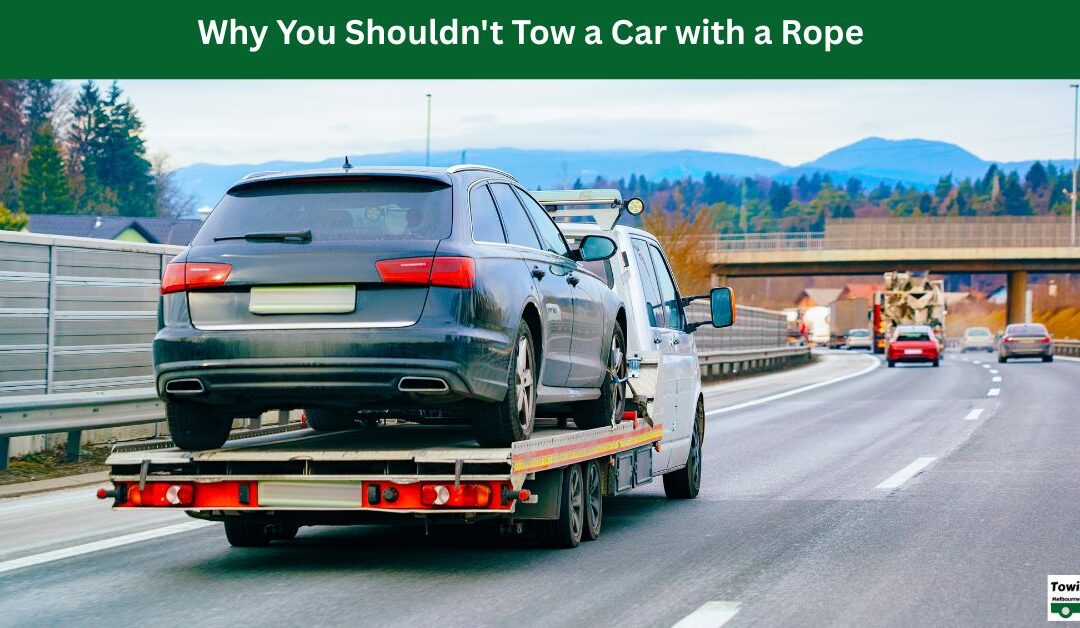
The safest and most reliable solution is to call a professional towing service. Tow trucks are equipped with hydraulic lifts, winches, wheel lifts, and flatbeds that secure the vehicle for transport without damaging it. Professional operators are trained to handle a wide variety of breakdown situations, from roadside assistance to accident recovery. They also carry insurance, meaning you’re covered if any damage occurs during towing.
Flatbed towing, in particular, is the safest method for most vehicles, as it eliminates the risk of drivetrain damage and keeps the car completely off the road. Even in urgent situations, a quick call to a towing company can prevent the risks and expenses associated with rope towing. In addition, many towing services offer roadside repairs, so you may not even need to tow the car if the problem can be fixed on the spot.
Professional towing also ensures compliance with local traffic laws and safety regulations. Licensed operators use certified equipment, display the required hazard signs, and secure the vehicle properly for transport. This protects not only your car but also your safety and the safety of everyone else on the road.
Conclusion
While towing with a rope might seem like a convenient solution in a pinch, the risks far outweigh the benefits. The potential for accidents, legal trouble, vehicle damage, and personal injury makes it a method best left in the past. Modern roads, higher traffic volumes, and stricter safety standards demand professional towing solutions that prioritise stability, visibility, and control. If your vehicle breaks down, the safest choice is to call a qualified towing service. The small cost of professional help is a worthwhile investment compared to the potential consequences of rope towing.
Contact us
Towing Melbourne Wide
4/10 Auburn Grove
Hawthorn East VIC 3123
(03) 9956 1908
Recent Comments